
If your basement gets wet, even a little and only in spring, fix that before you finish it. Drywall, carpet and framing over a damp wall hold moisture, grow mold, and come out again at your expense. A dry basement is the first requirement of a finished one. Everything else comes after.
Plenty of basements around Coraopolis, Moon and Sewickley can be turned into real living space with basement remodeling. Some need water work first. Here's how to tell which one you have.
Signs your basement has a water problem
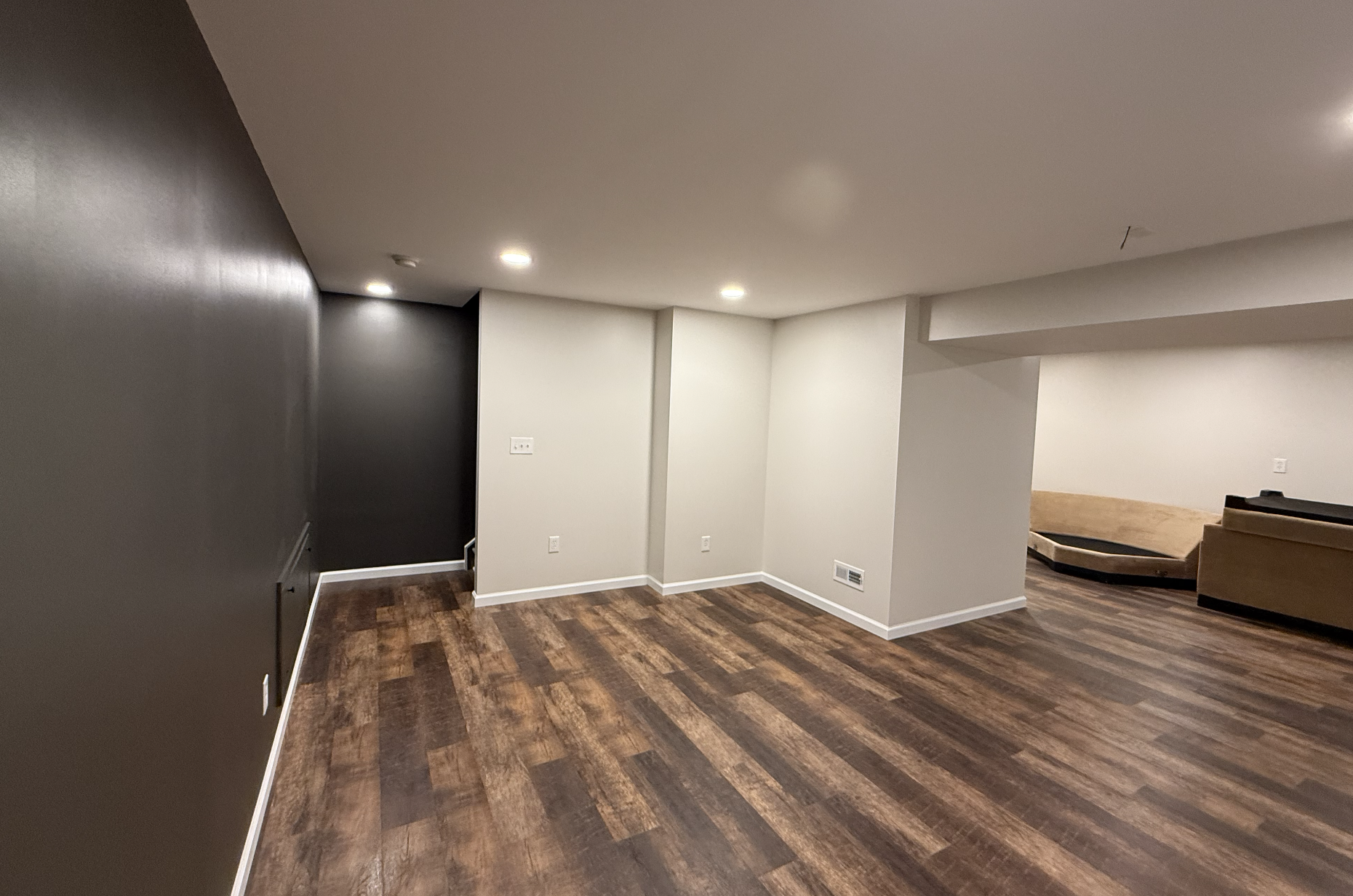
Some are obvious. Some only show up a few times a year.
Standing water or wet spots on the floor after heavy rain or snowmelt
White, chalky crust on block or concrete walls. That's efflorescence, minerals left behind by water moving through the wall
A musty smell that doesn't go away
Peeling paint or bubbling on the foundation walls
Rust on the bottom of metal shelving, the water heater or the furnace
Dark lines where the wall meets the floor
A sump pump that runs often, or no sump at all in a basement that sometimes gets water
If you're not sure, tape a square of plastic to the wall and floor for two days. Moisture on the wall side means water is coming through. Moisture on the room side means humidity.
Why basements out here get wet
These are the usual causes in western Pennsylvania houses.
Clay soil holds water against the foundation instead of letting it drain away.
Hillside lots send groundwater toward the uphill wall of the house.
Older block foundations are porous, and many were built without a modern drain system around the footing.
Gutters and grading are the simplest cause and the most often missed. Downspouts that empty right next to the house, or a yard that slopes toward it, put water where it does the most harm.
What to fix first, cheapest to most involved
Start outside. Clean the gutters, extend downspouts at least 4 to 6 feet from the house, and make sure the soil slopes away from the foundation. These are inexpensive and sometimes solve the whole thing.
Run a dehumidifier. If the issue is humidity and not water coming through, a dehumidifier running in summer may be all you need.
Seal cracks. Small, dry cracks in poured walls can be sealed. Active leaks need more than caulk.
Interior drainage and a sump. For water coming up at the wall-floor joint, a drain channel along the inside perimeter feeding a sump pump is a common fix. This is work for a basement waterproofing specialist.
Exterior waterproofing. Digging out the foundation to membrane it and add footing drains is the most thorough and the most expensive. It's usually reserved for serious problems.
Structural cracks, bowing walls or horizontal cracks in block are a different issue. Get those looked at by a structural engineer or foundation specialist before anything else.
Give it a season
After water work is done, wait through at least one wet season before closing up the walls if you can. A spring with no water tells you more than any promise on paper. If you're finishing in winter, at least watch it through a few heavy rains.
How a finished basement handles moisture
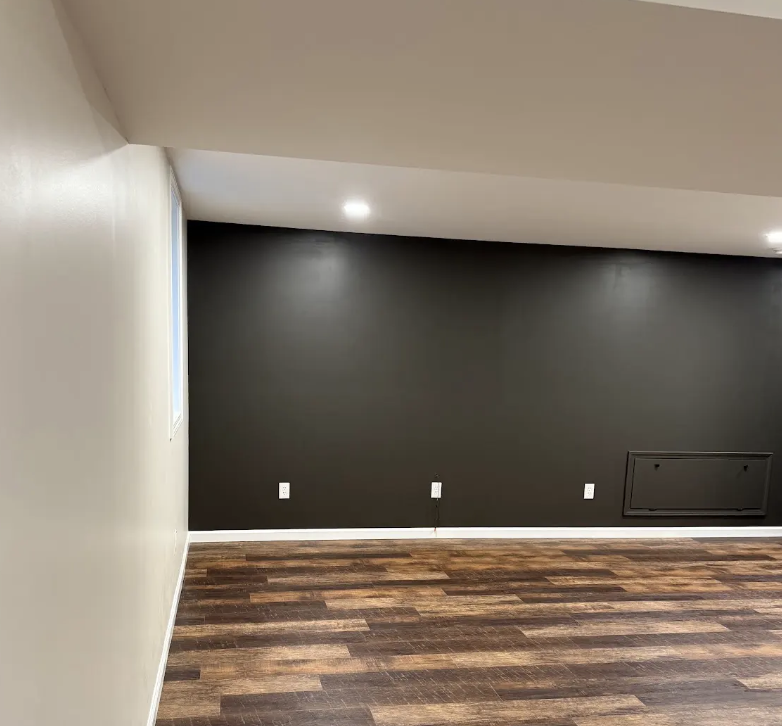
Once the water is handled, how the basement is built still matters. Good basement finishing uses materials that tolerate a below-grade space: rigid foam insulation against the concrete, framing kept off the slab or on a treated plate, mold-resistant drywall, and flooring like luxury vinyl plank that won't be ruined by a spill or a bit of humidity. Keeping access to the sump and the main shutoffs matters too.
This is part of why Trent walks every basement before he quotes it. If there's a water problem, it comes up first, before you've spent money on a design. If you're planning a bathroom down there too, that brings its own drain and ventilation questions, covered in adding a basement bathroom.
Ready to find out if your basement is ready to finish? Request your quote and Trent will take a look.
What it costs once it's dry
Finished basements in our area run from about $35,000 to $90,000 and up, depending on size, a bathroom, a bar or kitchenette, and egress windows. Our basement finishing cost guide breaks that down. Waterproofing work is separate from that number.
If you're still deciding whether it's worth doing at all, read is finishing your basement worth the money.
One customer, Vicky, had her basement finished with a full bathroom and wrote that "the project was completed on time and within budget, with no surprises along the way." No surprises in a basement starts with dealing with the water before the walls go up.
Frequently asked questions
Can you finish a basement that gets wet?
Not until the water problem is fixed. Finishing over a damp wall traps moisture behind drywall and insulation and leads to mold and rot.
How do I know if my basement is too wet to finish?
Look for standing water after rain, white chalky staining on the walls, a musty smell, peeling paint or rust on appliances. Taping plastic to the wall for two days shows whether moisture is coming through.
What causes wet basements in the Pittsburgh area?
Clay soil, hillside lots, older porous block foundations and poor gutter drainage or grading are the usual causes.
Do I need a sump pump to finish my basement?
Not every basement needs one, but if water comes up at the wall and floor joint, an interior drain with a sump pump is a common fix before finishing.
Should I waterproof before finishing a basement?
Yes. Any water or moisture problem should be fixed, and ideally watched through a wet season, before framing and drywall go in.
Finish it once
A finished basement should be the last time you think about that space, not the start of a new problem. Request your quote and Trent will walk the basement, tell you plainly whether it's ready, and give you a price to the penny that we stick to. See our basement remodeling work, or call 412-887-6446.
